Turkmenistan's President-for-life Saparmurat Niyazov is dead, leaving the repressive, energy-rich country in the hands of his deputy prime minister, Kurbanguly Berdymukhamedov. See the NY Times for more. View the labels sidebar for more on Turkmenistan.
Read More......Thursday, December 21, 2006


Friday, October 21, 2005
The Return of the Return of Turkmenbashi
I first saw the link to this this several days ago over at Leopolis, but only now got around to reading it. Seems Turkmenbashi, my favorite authoritarian ruler, has banned recorded music at all public events, on TV and at weddings. He's already banned opera and ballet as "unnecessary," surely earning the respect and admiration of Miller High Life drinkers everywhere.
But listen, does anyone out there have a Turkmenistan connection? A Fulbrighter and I are considering a trip sometime in the New Year, as we're both fascinated by the world he's created and I would like to interview one of the women there who's trying to leave the country through an online marriage agency. But here's the thing: you need to be invited by someone to get a visa. Perhaps it's just a matter of "buying" an invitation, like you do in Russia. I still haven't sorted it all out for sure, but if there's someone out there who'd like a visitor, or knows someone who knows someone who does -- you get the idea -- drop me a line.
Thursday, August 11, 2005
Return of Turkmenbashi
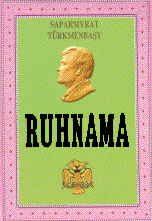
I can't get enough of Saparmurat Niyazov, the previously mentioned President-for-life of Turkmenistan, who looks a right bit like a certain Vegas singer. Also known as Turkmenbashi, Leader of the Turkmen, Niyazov has:
* ordered the construction of an ice palace in the middle of his desert country;
* loves melons;
* dislikes gold teeth;
* and is revered by at least one cobbler.
Go to the Turkmeni capital of Ashgabat and you'll find a statue of Turkmenbashi that rotates throughout the day so that it always faces the sun. The man's also a poet-philosopher, having revealed a way to remove "the complexities and anguishes from day to day living" in his book the Rukhnama, which is "on par with the Bible and Koran," required reading for Turkmeni children, and excerpted alongside the words of Mohammed on the walls of Ashgabat's newest mosque.
As for the poetry, Niyazov debuted in 2002 with the collection "Let My Turkmen People Prosper," which was soon translated into Russian and praised by certain elements of the Muscovy literati. Ever modest, Turkmenbashi turned down a request from the People's Council to be awarded the title "Great Turkmen Writer." However, he did allow them to rename January in his honor (and September in honor of his Rukhnama, now widely translated itself). He's also lent his face to the country's currency and vodka bottles.
Here's a nice Turkmeni travelogue with pictures, which at least shows that one American knows that the natural gas-rich Turkmenistan borders Afghanistan and Iran, making it a country not to be forgotten in America. Now if only the NY Times was so well informed, because how is it that the BBC can devote so much space to Turkmenbashi, while since 1996 the Times has only four mentions?
Monday, August 01, 2005
Girl, You'll Be a Woman Soon

Okay, when I wondered if there were any contemporary marriage laws as repressive as those dreamed up by Stalin, I was showing my Euro-centric leanings, because of course there are wildly repressive laws.
First I told you about Turkmenistan's $50,000 marriage tax, which was recently rescinded, and now I present you with this litany of horrors, which shows many of the regimes of the Middle East to be either wildly repressive or boldly unsullied by western ideals. As they say, We report, you decide.
Let's start with Iran, where adultery is punishable by death and a girl can be married off at the age of nine. Next on our magical mystery tour is the liberated Constitutional Monarchy of Kuwait, where a girl must be no younger than fifteen before she's married -- though she'll need to be older than 25 if she wants to choose her own spouse. Prior to that, a judge or her father is entrusted with the power to make that selection. As for marrying a non-Kuwaiti citizen, it doesn't matter if you're eight or eighty. You're gonna need to know someone who pumps the oil. There are laws against that.
Dropping down to Africa, you'll see that the United Republic of Tanzania allows girls of any age to be entered into marriage, though only if there is no plan to consumate that marriage before her tweltfh birthday. So much for wanting one of these. In Japan, meanwhile, the age of sexual consent is fourteen, or at least in the more conservative sections of the country; elsewhere it's thirteen. Of course, in just about any self-respecting Japanese city, you can buy "artist panties" from a vending machine. Be sure to bring crisp bills.
On the matter of the age of sexual consent, can someone tell me why the Chilean government thinks it's all right for twelve-year-old girls to have sex with a boy or man no younger than herself, if she then has to wait until she's eighteen before having sex with another female? Chile isn't alone with the young age of consent law. There are creepy websites telling you that twelve is legal in Mexico and Paraguay too. Uncivilized, isn't it? And I mean you too, Canada. No wonder you're so quiet up there. Age of consent: fourteen.
Just once, I'd like to see a government pass a law making the age of consent forty-one. It doesn't have to be a big country. It'd just have to be one brave enough to contribute to the diversity of the human experience.
I'll end with Europe*, birthplace of the Enlightenment, where you should know that you can't get married if you're a twelve year-old living in the Netherlands, but you can avail yourself of that country's laws allowing assisted suicide. Granted, most people move there for the pot.
*I lied. Back to Iran, where according to this , homosexuals caught in the act are given four options: a hanging, a good old-fashioned stoning, a halving by the sword, or a drop "from the highest perch." Imagine that played out on Law & Order:
Lawyer (to Crowd): Actually, there's a higher point on the other end of town.
Crowd-Member: The new McDonald's!
Lawyer: Yes, the Golden Arches ...
Sunday, July 31, 2005
Dictator, I served with Joseph Stalin. I knew Joseph Stalin. Joseph Stalin was a friend of mine. Dictator, you're no Joseph Stalin.*
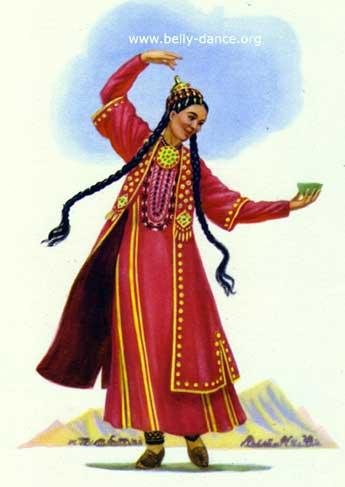
After reading about Stalin prohibiting marriages between Soviet citizens and foreigners, I wondered if there were any countries with similar restrictions today. Enter Turkmenistan, an all but closed society that from 2001 until earlier this year levied a $50,000 marriage tax against foreigners marrying a Turkmen citizen.
The country borders a founding member of the Axis of Evil, and seems to be looking for more than a Contact High of Evil itself: it is the only former Soviet republic in which no form of political opposition, not even a sly shake of the head at the local coffee shop, is allowed. This has benefited one man since 1985, Saparmurat Niyazov, the former Communist Party Leader of the Turkmen Soviet Socialist Republic and until recently President for Life. (There will be elections in 2009, he has declared. As for the level of debate you can expect during the campaign, well, in a country that outlaws opposition, it's sure to be interesting:
Niyazov: I think my opponent should be tortured and then shot.
Opponent: I agree. But perhaps we differ in our approach. Let me explain.)
According to the United States Embassy in Ashgabat, the capital of Turkmenistan:
In the past some Americans have been told there is an oral decree of the Hakim (Mayor) of Ashgabat forbidding foreigners from marrying Turkmen citizens. Regardless of what you may be told, you can get married and you do not have to pay any "administrative fees" to do so. If you have any difficulties, please let us know.
Still, if you wish to marry a Turkmen woman, it will still cost you, if only in time. You must live in Turkmenistan for no less than one year before your marriage will be recognized by the Turkmen authorities.
*Title Disclaimer, through which the author explains that he isn't in fact on friendly terms with Joseph Stalin.
Read More......

Subscribe to:
Posts (Atom)


